





Latest findings on cell death mechanisms in focus at the 31st ECDO Conference
ECDO conference in Berlin brings together experts from around the world
From October 7 to 10, 2025, around 250 researchers, clinicians, and students from 22 countries gathered in Berlin to discuss the latest findings on programmed cell death. The 31st Annual Meeting of the European Cell Death Organization (ECDO) was held under the motto “Classic Meets Modern – Functional Specificity and Crosstalk of New and Old Types of Cell Death.” The focus was on classical and newly discovered forms of cell death and their significance for diseases such as cancer, Alzheimer's, Parkinson's, and inflammatory processes.
The conference was organized by the Faculty of Medicine at Otto von Guericke University Magdeburg in cooperation with the Campus Academy/MHB and the ECDO. The aim was to forge closer links between basic research and clinical application and to provide new impetus for therapeutic developments.
“Programmed cell death is strictly controlled during development to form tissue structures correctly. Only when we understand the signaling pathways can we use this knowledge for innovative therapies,” explained Prof. Dr. Inna Lavrik, President of the ECDO and Head of the Translational Inflammation Research Working Group (AG TEF) in Magdeburg.
A highlight of the conference was the presentation of prestigious research awards:
- ECDO Award 2025: Prof. Kodi S. Ravichandran (USA) for his groundbreaking work on efferocytosis, the process of removing dead cells.
- Jürg Tschopp Award 2025: Prof. Marcus Conrad (Helmholtz Zentrum München) for the discovery of ferroptosis, an iron-dependent form of cell death.
- Cell Death & Differentiation Prize 2025: Prof. Zhijian “James” Chen (USA) for the discovery of the cGAS–STING signaling pathway, which links cell death and immune response.
Particularly gratifying: M.Sc. Corinna König from the TEF working group was awarded a poster prize. Her work sheds light on cell death mechanisms in the context of inflammatory diseases. It underscores Magdeburg's high international visibility in recognizing young scientists for originality, methodological excellence, and clinical relevance.
Cell death research is one of the most dynamic areas of biomedicine. The 31st ECDO Annual Meeting impressively demonstrated how a deeper understanding of cell death mechanisms forms the basis for new diagnostic and therapeutic approaches – a central building block for future translational medical research.
More information about the ECDO: www.ecdo.eu
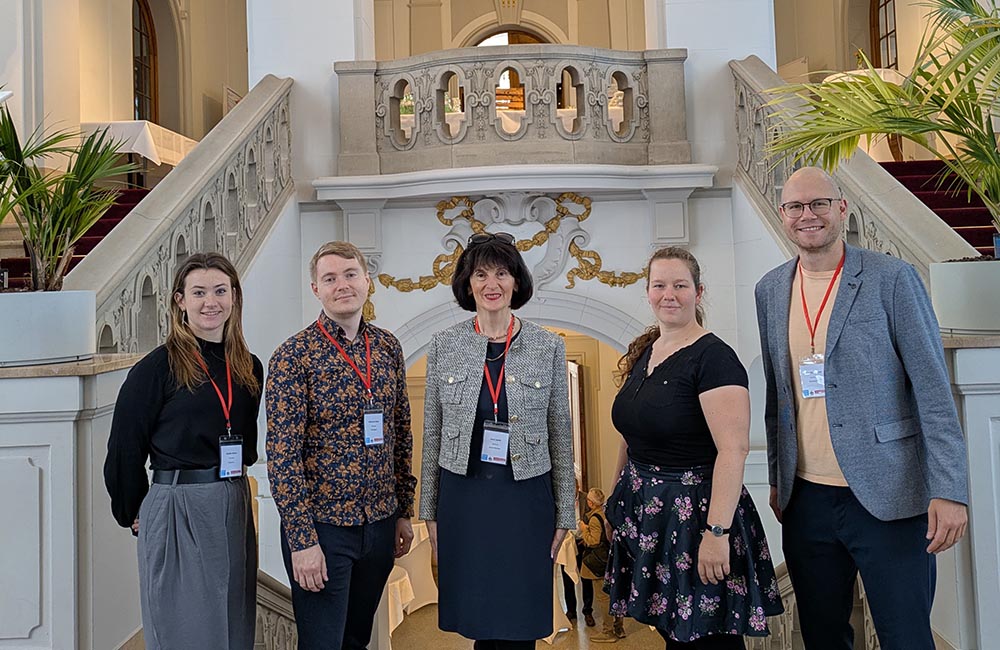
Photo: The organizing team from Magdeburg: (from left) Emelie Wicke, Johannes Espe, Prof. Inna N. Lavrik, Corinna König, Fabian Wohlfromm. Photo: private